Belém is a historic district in Lisbon, rich in culture, history, and architectural landmarks. Situated along the Tagus River, it played a pivotal role during the Age of Discovery in the 15th and 16th centuries, and many of the district’s monuments reflect Portugal’s maritime heritage. Here’s a detailed overview of Belém’s monuments, history, architecture, and some interesting facts.
History
Belém’s history is deeply intertwined with Portugal’s maritime expansion. The district became significant during the reign of King Manuel I (1495-1521), who supported the country’s naval explorations. The construction of key monuments like the Jerónimos Monastery and Belém Tower marked this golden age of discovery, when Portuguese explorers ventured across the globe, establishing trade routes to Africa, Asia, and Brazil.
In the late 19th and early 20th centuries, Belém continued to evolve as a symbol of national pride, and many of its buildings were restored or repurposed to commemorate Portugal’s legacy.
Monuments & Sites of Interest
- Jerónimos Monastery (Mosteiro dos Jerónimos)
– Significance: One of the most iconic landmarks in Portugal, this UNESCO World Heritage site is a masterpiece of Manueline architecture (a Portuguese variation of late Gothic). It was commissioned by King Manuel I in the early 16th century to celebrate Vasco da Gama’s successful voyage to India.
– Features: The monastery features intricate decorations, especially in its cloisters, and houses the tombs of Vasco da Gama and poet Luís de Camões.
– Fun Fact: The monastery’s construction took over 100 years and involved skilled artisans from all over Europe.
- Belém Tower (Torre de Belém)
– Significance: Built in the early 16th century to guard the entrance to the port of Lisbon, this tower is one of Portugal’s most famous symbols and also a UNESCO World Heritage site.
– Architecture: Combining Gothic, Moorish, and Manueline elements, the tower features a decorative bastion, a balcony with ornate carvings, and a watchtower that overlooks the river. It originally stood on a small island in the Tagus but is now connected to the mainland.
– Interesting Fact: The tower was originally intended as a defensive structure, but over time it also served as a customs post, prison, and even a royal residence.
- Padrão dos Descobrimentos (Monument to the Discoveries)
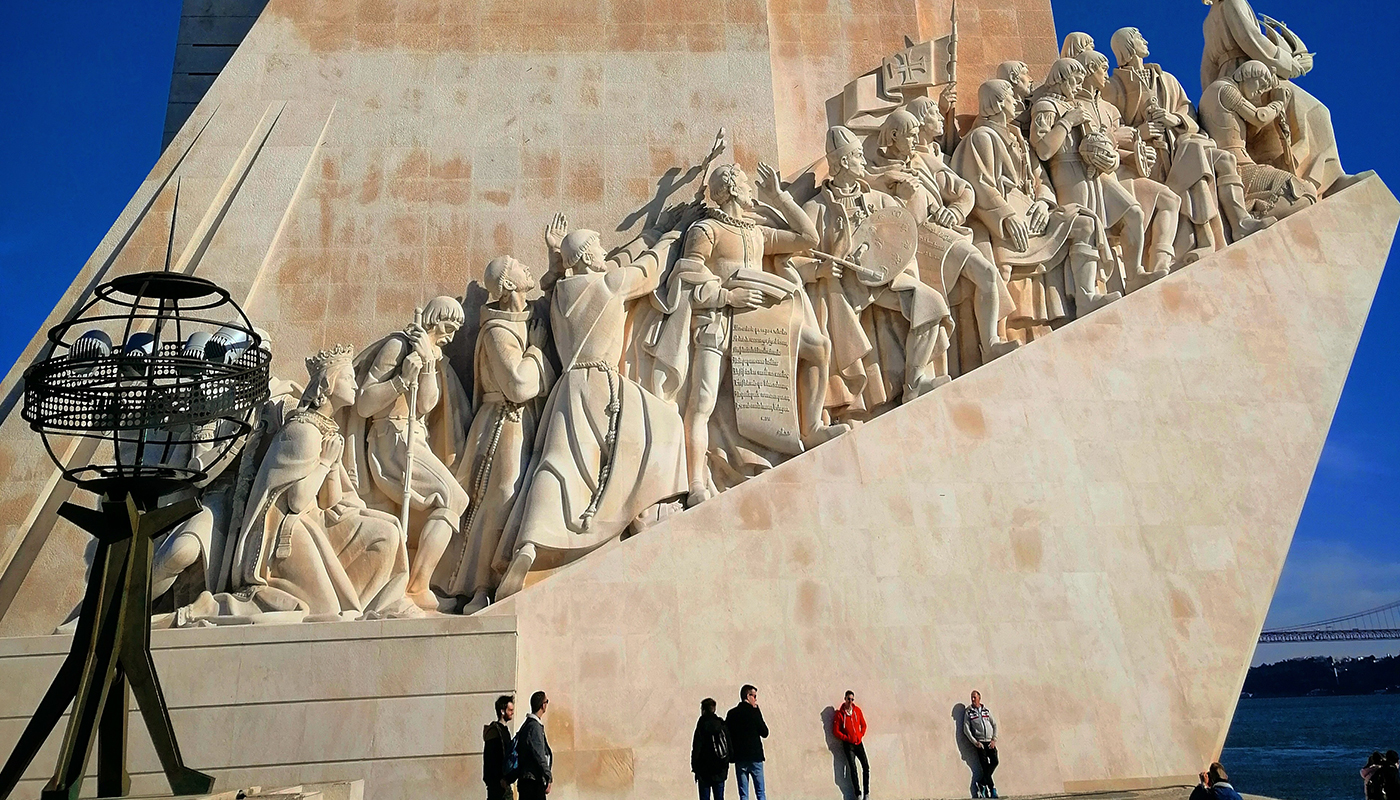
– Significance: This monumental sculpture on the banks of the Tagus River was built in 1960 to celebrate the 500th anniversary of the death of Prince Henry the Navigator, a key figure in the Portuguese Age of Exploration.
– Features: The monument represents a stylized ship’s prow, with statues of important explorers such as Vasco da Gama, Ferdinand Magellan, and Bartolomeu Dias. It’s an important symbol of Portuguese maritime history.
– Fun Fact: The monument stands at 52 meters tall and offers panoramic views of the river and surrounding area from its observation deck.
- The National Coach Museum (Museu Nacional dos Coches)
– Significance: This unique museum houses one of the world’s most remarkable collections of royal carriages, some of which date back to the 16th century.
– Features: The museum’s collection includes lavishly decorated coaches used by Portuguese monarchs, as well as other historical carriages from Europe.
– Fun Fact: The collection was originally housed in the royal riding school before being moved to the Belém district in 1905.
- MAAT – Museum of Art, Architecture, and Technology
– Significance: Opened in 2016, this contemporary museum is housed in a striking building along the riverfront, designed by the British architecture firm Amanda Levete Architects. It focuses on the intersection of art, architecture, and technology.
– Architecture: The sleek, curved design of the building has earned it international recognition. It features a rooftop terrace with sweeping views of the Tagus River.
– Interesting Fact: The museum’s architecture contrasts with the historical landmarks of Belém, adding a modern layer to the district’s cultural landscape.
- Belém Cultural Center (Centro Cultural de Belém)
– Significance: A large cultural complex that includes concert halls, museums, and exhibition spaces, the Belém Cultural Center is a hub for the arts in Lisbon.
– Architecture: Designed by the architect Vasco Vieira, the building’s clean, modern lines provide a sharp contrast to the historic buildings of Belém.
– Interesting Fact: The center is home to the Berardo Collection Museum, which has one of the largest contemporary art collections in Portugal.
- The Padrao da Restauracao (Monument to the Restoration)
– Significance: This monument commemorates the Portuguese Restoration War, which restored Portugal’s independence from Spain in 1640. It’s less visited but offers a glimpse into the country’s more recent history.
Architecture
Belém’s architecture is a fusion of different styles, reflecting both its historical significance and modern transformation:
– Manueline Style: Seen in the Jerónimos Monastery and Belém Tower, this style is characterized by elaborate and ornate detailing, with maritime motifs such as ropes, anchors, and shells symbolizing Portugal’s naval power.
– Pombaline Style: In some of the buildings dating from the 18th century (like the Belém Palace), you can find traces of the Pombaline style, a neoclassical design that aimed to rebuild Lisbon after the 1755 earthquake.
– Modernist & Contemporary: The MAAT and Cultural Center introduce sleek, minimalist designs that contrast with the more historic elements of Belém.
Interesting Facts
– Pastéis de Belém: Belém is famous for its custard tarts, known as pastéis de nata. The original Pastéis de Belém bakery, established in 1837, still exists today, serving the famous tarts made from a secret recipe.
– Vasco da Gama’s Legacy: The Jerónimos Monastery was commissioned to honor Vasco da Gama’s successful voyage to India, and it’s here that his tomb rests. His achievements are a key element of Portugal’s Age of
Discovery.
– Lisbon’s Port of Departure: During the Age of Exploration, many of Portugal’s great explorers, including Vasco da Gama, set sail from the docks near Belém, marking the district as the starting point for the country’s vast maritime empire.
– The Royal Palace of Belém: The Palácio Nacional de Belém is the official residence of the President of Portugal. Though not open to the public for general visits, it is sometimes used for ceremonial functions and official events.
Conclusion:
Belém is a district where Portugal’s rich maritime history blends seamlessly with stunning architecture and modern cultural spaces. It remains one of the most significant and visited areas of Lisbon, offering a diverse range of attractions and a glimpse into Portugal’s glorious past.