Tomar is a historic town located in the central region of Portugal, known for its rich medieval history, stunning architecture, and deep connection to the Templar Knights. Below is an overview of Tomar, including its history, notable landmarks, and fascinating facts.
Location
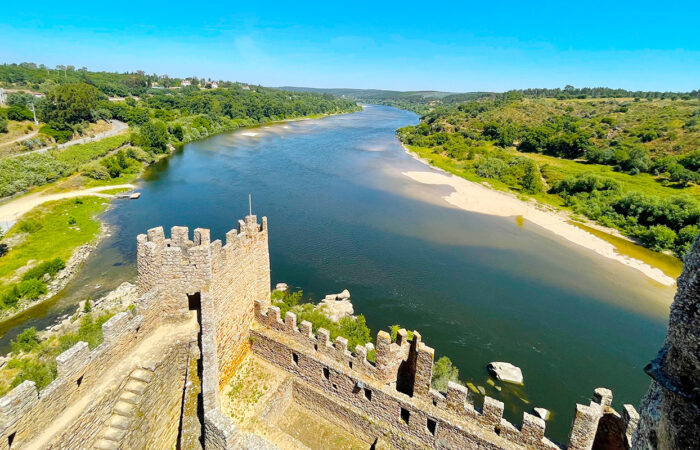
It is about 140 kilometers (87 miles) north of Lisbon, nestled along the Nabão River. The town is easily accessible by car making it a popular day trip from the Portuguese capital.
Old Town
- The old town of Tomar retains much of its medieval charm, with narrow, winding streets, cobbled alleys, and traditional Portuguese buildings. The town is home to several historical landmarks, many of which are tied to the Order of the Templars.
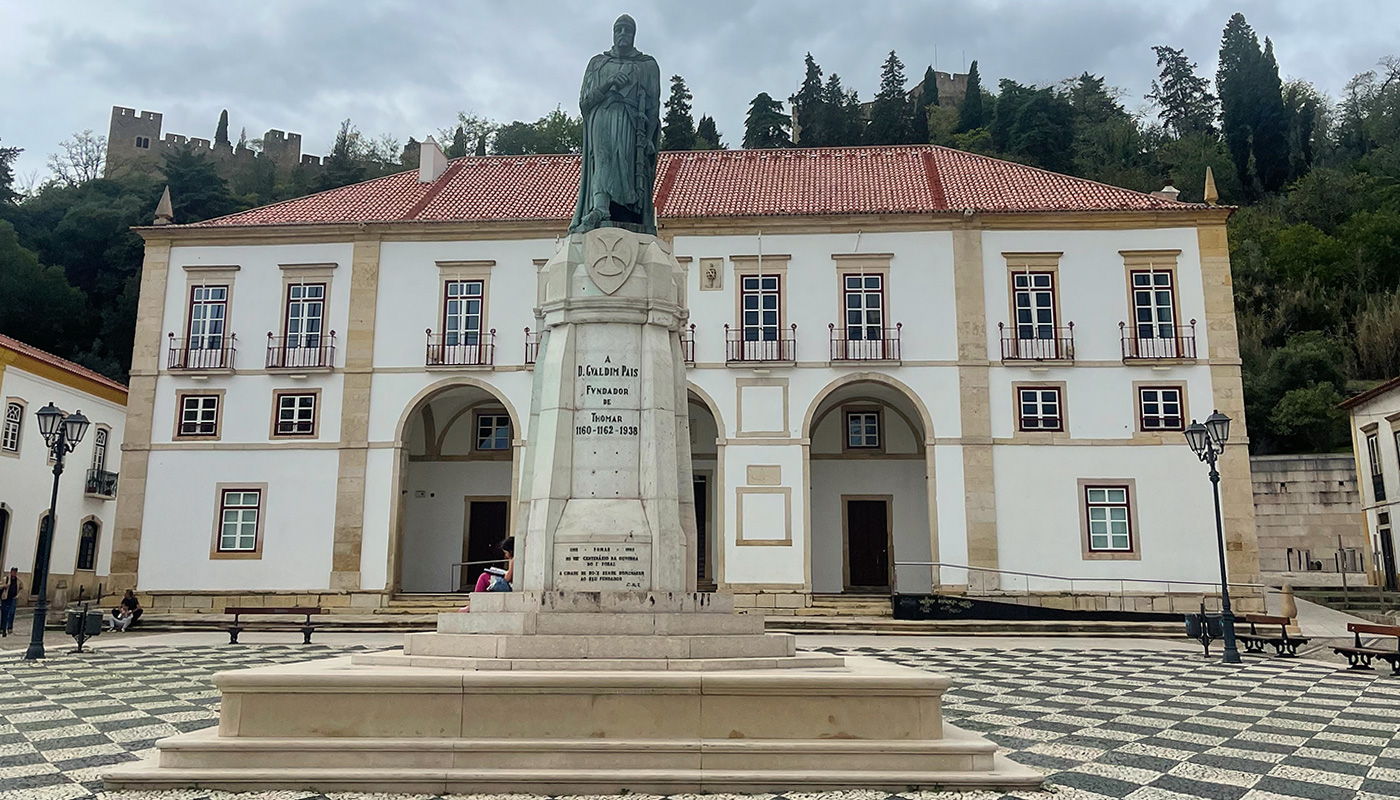
- The main square, Praça da República, serves as a focal point for the town, with its cafes, shops, and proximity to the Igreja de São João Baptista (Church of St. John the Baptist) and the Old Jewish Quarter.
Castelo de Tomar (Tomar Castle)
- History: The Castelo de Tomar was founded in the early 12th century by Gualdim Pais, a master of the Templar Order. The Templars built the castle as part of their strategic plan to defend Portuguese lands during the Christian reconquest of the Iberian Peninsula.
- Features: The castle is perched on a hill and is known for its impressive fortifications, including stone walls, battlements, and watchtowers. The Charola (the Templar’s round church), located within the castle, is a key feature of the site.
- The castle also has a Keep and a vast courtyard, offering panoramic views over Tomar and the surrounding landscape.
Convento de Cristo (Convent of Christ)
- History: The Convento de Cristo is perhaps the most famous and significant landmark in Tomar. Originally a Templar stronghold, it became a convent of the Order of Christ after the Templars were disbanded in the early 14th century. It was here that the Portuguese kings and nobility took part in rituals related to the Order of Christ.
- Architecture: The Convento de Cristo is a striking example of medieval architecture, with a mix of Romanesque, Gothic, Manueline, and Renaissance styles. Notable features include:
- The Charola (the round Templar church), which is an octagonal chapel with a unique and intricate design.
- The Manueline window in the main church, one of the finest examples of the Manueline style, showcasing maritime motifs and intricate carvings.
- The Dormitory and the Cloisters, which reflect the monastic lifestyle of the Order of Christ.
- UNESCO World Heritage: In 1983, the Convento de Cristo was designated as a **UNESCO World Heritage Site, recognized for its historical significance and outstanding architectural beauty.
History of Tomar
- Founding: Tomar’s history dates back to the Roman era, but it rose to prominence in the 12th century with the establishment of the **Templar Order** in Portugal. The Order of the Templars played a key role in the town’s development.
- Templars: The Templars were granted the Tomar Castle and the surrounding lands in 1160 by King Afonso Henriques, the first king of Portugal. Tomar served as the headquarters of the Templar Order in Portugal.
- Post-Templar Era: After the dissolution of the Templar Order in 1312, the Order of Christ took over the Templar assets, including Tomar. The order remained influential in Portugal, particularly during the Age of Exploration.
- Royal Influence: Over the centuries, Tomar remained a key religious and military center. It became a royal town, and the Convento de Cristo was expanded by various monarchs, particularly during the reign of King Manuel I.
Templar Influence
- Tomar is intrinsically linked to the Templar Knights, who played a central role in both the military and spiritual history of Portugal. The Templar connection can be seen in the architecture of the Convento de Cristo and Tomar Castle, both of which are imbued with Templar symbolism, including the cross of the Templars and the round church (Charola).
- The Order of Christ replaced the Templars after their suppression in the 14th century, but continued many of their traditions and practices. The Order of Christ was instrumental in Portugal’s maritime exploration, with Prince Henry the Navigator being one of its most famous members.
Architecture
- Romanesque to Manueline Styles: Tomar’s architecture reflects a rich blend of Romanesque, Gothic, Manueline, and Renaissance styles. The Convento de Cristo is a prime example of this evolution, with early Romanesque features giving way to the more intricate Manueline style in the 16th century.
- Moorish Influence: The Castelo de Tomar and the Convento de Cristo also exhibit Moorish influences, especially in the intricate tilework and arches.
- Templar Symbolism: The Charola in the Convento de Cristo is an octagonal structure symbolic of the Templars’ religious beliefs, while the cloisters reflect the monastic life of the Order.
Interesting Facts
- The Tomar Knights: The Order of Christ, which succeeded the Templars, played a crucial role in Portugal’s Age of Exploration, sponsoring voyages to the New World, particularly the travels of Vasco da Gama.
- UNESCO World Heritage: As mentioned, the Convento de Cristo is a UNESCO World Heritage Site, recognized for its cultural and historical significance.
- Famous Festivals: Tomar hosts the Festa dos Tabuleiros (Festival of the Trays) every four years (next in 2027). This festival is a major event in the town, featuring parades with large trays of bread and flowers, a tradition that dates back centuries.
- Historic Connection to Portugal’s Independence: The town of Tomar is also historically significant as the site of a key event in Portugal’s independence. In 1640, during the Portuguese Restoration War, John IV of Portugal was proclaimed king in Tomar, marking the start of the Portuguese independence from Spain.
- The Templar’s Secret: There are many legends and speculations about the Templars’ treasure, which some believe was hidden in Tomar. The Charola, with its mysterious design, and the secretive rituals of the Order have fueled speculation about hidden secrets, though there is no concrete evidence.
Conclusion
Tomar is a town steeped in history, from its Templar roots to its role in Portugal’s monarchy and the Age of Exploration. Its rich architecture, highlighted by the Convento de Cristo, and the enduring influence of the Templar Knights make it one of Portugal’s most fascinating and historic locations. Whether you’re exploring the Castelo de Tomar, visiting the Convento de Cristo, or wandering through the charming streets of the old town, Tomar offers a deep dive into Portugal’s past.