Fátima is one of the most important pilgrimage destinations in Portugal and a significant site in the Catholic world. Located about 130 kilometers north of Lisbon, it is best known for the apparitions of Our Lady of Fátima, where three young shepherd children reported seeing the Virgin Mary in 1917. The town is now home to the Sanctuary of Our Lady of Fátima, attracting millions of pilgrims each year. Here’s a comprehensive guide to Fátima’s history, architecture, churches, places to visit, and interesting facts.
History of Fátima
Fátima’s history is most closely linked to the events of 1917, when three shepherd children—Lucia dos Santos and her cousins Jacinta and Francisco Marto—claimed to have witnessed several apparitions of the Virgin Mary. The children reported seeing the Lady on the 13th of each month from May to October. These apparitions were accompanied by a series of prophetic messages, including calls for repentance, prayer (especially the Rosary), and conversion.
- The Apparitions: In May 1917, the children were tending sheep near the Cova da Iria, a field near Fátima, when they saw a lady dressed in white who identified herself as the Lady of the Rosary. Over the next five months, the apparitions continued, with the Lady giving the children messages about peace, the importance of prayer, and the need for devotion to God.
- The Miracle of the Sun: The most famous event connected to the apparitions was the Miracle of the Sun, which took place on October 13, 1917, at the final apparition. Thousands of people gathered in Fátima, and they witnessed the sun appear to spin in the sky, change colors, and move in unusual ways. This event is still seen by many as a divine sign.
- Canonization of the Seers: The two youngest seers, Jacinta and Francisco Marto, were beatified in 2000 by Pope John Paul II and were canonized as saints by Pope Francis in 2017. Lucia dos Santos, the eldest, became a Carmelite nun and lived until 2005. She was beatified in 2008, and her canonization process is ongoing.
Architecture
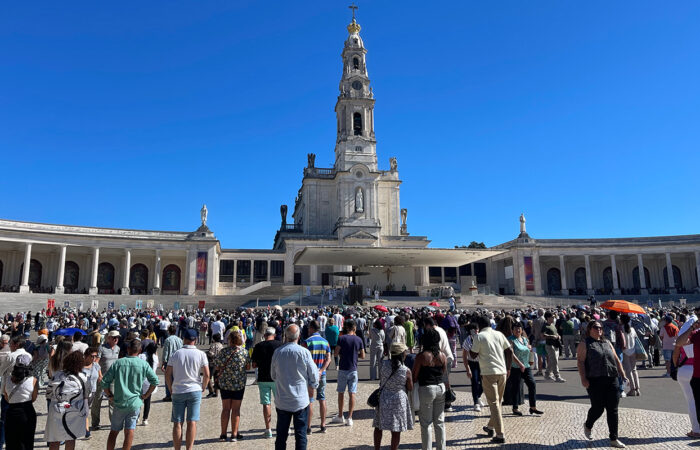
Fátima’s architecture is designed to reflect both the spiritual significance of the site and the large number of pilgrims who visit. The Sanctuary of Our Lady of Fátima is a complex of churches, chapels, and monuments, all set in a large open square.
- Basilica of Our Lady of the Rosary
– History: The Basilica of Our Lady of the Rosary (Basílica de Nossa Senhora do Rosário de Fátima) was built between 1928 and 1953, following the growing significance of the apparitions. It is the main church of the Sanctuary and the site where the relics of Francisco and Jacinta Marto are kept.
– Architecture: The Basilica is a beautiful example of Neo-Baroque architecture. The facade features large statues of saints, and inside, the basilica is adorned with a grand altar and marble floors. The tomb of the Marto siblings and of Lucia are located in the crypt.
- Chapel of the Apparitions (Capelinha das Aparições)
– History: The Chapel of the Apparitions is the heart of the Sanctuary, located at the site where the children reported seeing the Virgin Mary. The original chapel was built in 1919, but it was replaced by the current structure in 2004.
– Architecture: This simple yet striking chapel is designed in a modernist style, with a whitewashed exterior and a striking altar. The Cova da Iria, the site of the apparitions, is marked by a statue of the Virgin Mary above the altar. Pilgrims often light candles here in prayer and reflection.
- The Basilica of the Holy Trinity
– History: Built between 2004 and 2007, the Basilica of the Holy Trinity** (Basílica da Santíssima Trindade) is a modern church located next to the main square of the Sanctuary. It was designed to accommodate the large number of pilgrims visiting Fátima.
– Architecture: The basilica is a modern design with a simple, clean aesthetic. The interior features beautiful stained-glass windows and mosaics. It is one of the largest churches in the world, with a seating capacity for 8,000 people.
- The Monument to the Sacred Heart of Jesus
– History: Located in front of the Basilica of the Holy Trinity, this monumental statue of the Sacred Heart of Jesus was erected in 2004 as part of the expansion of the Sanctuary.
– Architecture: The statue is made of stone and stands on a large pedestal, offering a commanding view of the Sanctuary.
Places to Visit
- Sanctuary of Our Lady of Fátima (Santuário de Nossa Senhora de Fátima)
– The Sanctuary itself is the main place of worship and pilgrimage in Fátima. Pilgrims come here to pray, light candles, and reflect on the apparitions. The Sanctuary includes the Basilica, Chapel of the Apparitions, and a large open square (Praça do Santuário) where pilgrims gather for Mass and other religious events.
- The Cova da Iria
– The Cova da Iria is the field where the children saw the apparitions. A statue of the Virgin Mary stands at the site of the apparitions, and this area is central to the experience of visiting Fátima.
- The Museum of the Sanctuary of Our Lady of Fátima
– Located within the Sanctuary complex, the Museum houses a variety of exhibits related to the apparitions, the history of Fátima, and the life of the three shepherd children. It includes personal objects, photos, and items related to the Miracle of the Sun.
- Aljustrel and Valinhos
– These are the two villages where the three shepherd children, Lucia, Jacinta, and Francisco, were born. Aljustrel is home to the homes of the children, which have been preserved and are open to visitors. Valinhos is the site of the first apparition in 1917, where the children received the message from the Virgin Mary.
- Via Sacra (The Way of the Cross)**
– The Via Sacra is a path leading up to the Sanctuary, marked by 14 chapels representing the Stations of the Cross. Pilgrims often walk this path as an act of devotion, particularly during the Lenten and Easter seasons.
Interesting Facts
- Millions of Pilgrims: Fátima is one of the largest Catholic pilgrimage sites in the world, with millions of pilgrims visiting each year. The site is particularly crowded on the 13th of May and October, the anniversary dates of the first and final apparitions, respectively.
- The Miracle of the Sun: The Miracle of the Sun, which occurred on October 13, 1917, was witnessed by tens of thousands of people. It was described as the sun appearing to spin and change colors in the sky, a phenomenon that many believe to be a divine sign.
- A Global Pilgrimage: Fátima attracts pilgrims from all over the world, and many visitors walk long distances or even make the journey on their knees in acts of devotion. The Sanctuary provides a space for people of all backgrounds and nationalities to pray and reflect.
- The Role of Lucia: Lucia dos Santos, the eldest of the three children, became a Carmelite nun. She continued to have visions throughout her life, and her testimony played a key role in the recognition of the apparitions. Her canonization process is ongoing, and she is deeply revered by pilgrims.
- Papal Visits: Popes have visited Fátima multiple times, including Pope John Paul II in 1982, who credited the Virgin Mary of Fátima with saving his life after he was shot in St. Peter’s Square in 1981. He also visited in 2000 during the beatification of Jacinta and Francisco.
- The Secret of Fátima: The Three Secrets of Fátima were part of the messages given to the children during the apparitions. The secrets were later revealed and include prophecies about world events, such as the spread of communism, the suffering of the Church, and the assassination attempt on Pope John Paul II.
Conclusion
Fátima is a place of deep religious significance, drawing millions of pilgrims each year. Its history, rooted in the 1917 apparitions, continues to inspire faith, reflection, and devotion. The Sanctuary, with its majestic basilicas, chapels, and historical sites, serves as a spiritual center and a beacon of hope for many. Whether you’re interested in the religious aspects, the architectural beauty, or simply the peaceful atmosphere, Fátima is a must-visit destination in Portugal for both pilgrims and tourists alike.