Arrábida is a beautiful region located in southern Portugal, famous for its stunning natural beauty, historical significance, and architectural gems. Here’s a breakdown of its history, architecture, location, sites of interest, and some fun facts:
Location
Arrábida is located in the Setúbal District, about 30 km south of Lisbon, near the Atlantic Ocean. The region is part of the Arrábida Natural Park, which spans across the municipalities of Setúbal, Sesimbra, and Palmela. The area is defined by its lush landscapes, rugged coastline, and charming towns, making it a popular destination for nature lovers and history buffs.
History
Arrábida has a rich history that dates back to the Roman period and beyond. Here are a few key historical highlights:
– Roman Influence: The region was inhabited by the Romans, who left behind remnants of roads, villas, and other infrastructure.
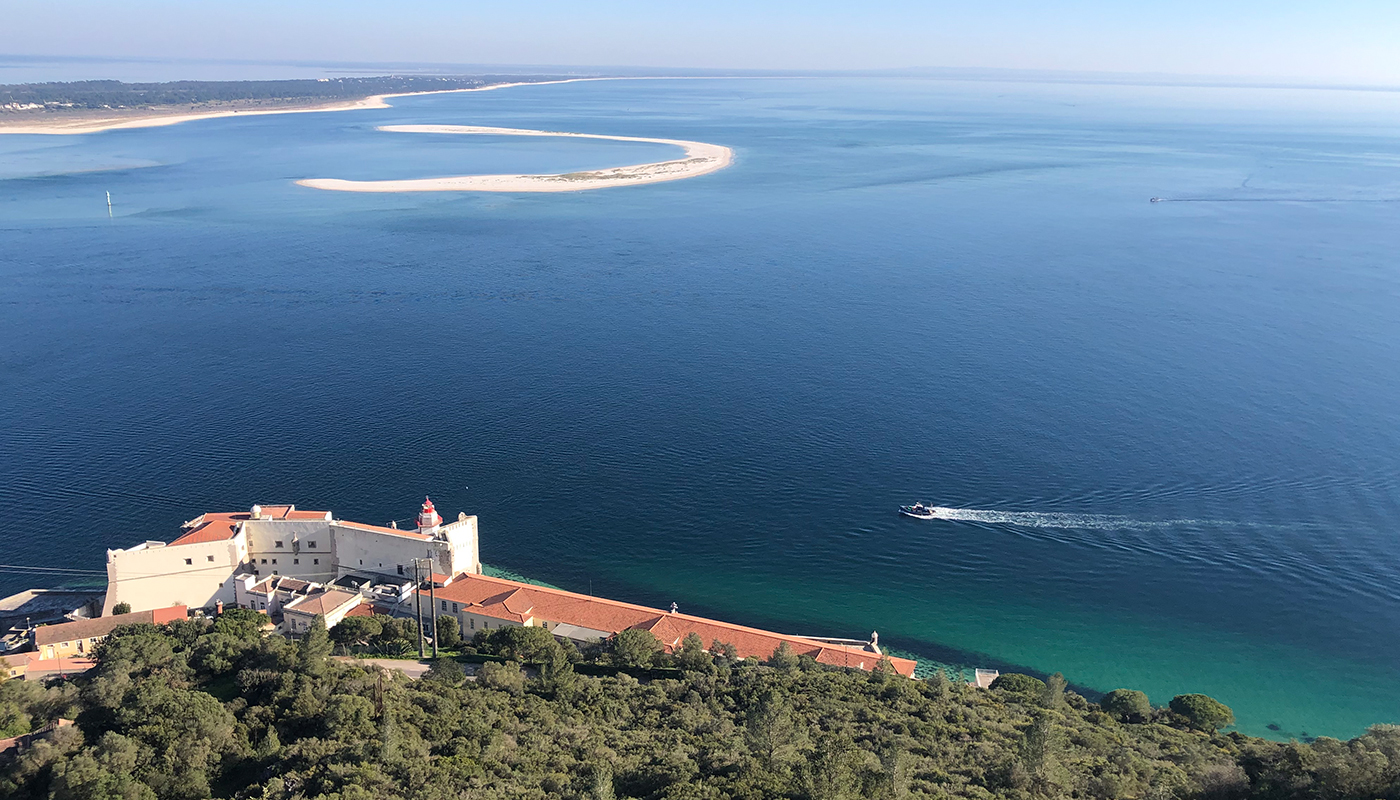
– The Monastery of Arrábida: The most significant historical site in the area is the Convento de Nossa Senhora da Arrábida, a 16th-century Franciscan monastery perched on a hilltop overlooking the sea. The monastery was founded in 1540 and served as a place for ascetic religious life, with monks living in seclusion. The monastery is famous for its serene setting and beautiful architecture.
– 19th-Century Wealth: In the 19th century, wealthy Portuguese aristocrats and nobility began to build villas and palaces in the area, drawn to its beauty and proximity to Lisbon.
Architecture
The architecture of Arrábida reflects its historical and religious significance, with a blend of medieval, Renaissance, and later styles:
– Convento de Nossa Senhora da Arrábida: The monastery is a notable example of Renaissance architecture. Its simplicity, as is common in Franciscan designs, is combined with the stunning views it offers of the surrounding natural landscape.
– Fortresses: There are several fortresses built along the coast, including the Fort of São Filipe in Setúbal, which dates back to the 16th century and offers panoramic views of the region.
– Charming Towns: The towns of Sesimbra and Setúbal have historic centers with narrow streets, whitewashed buildings, and a blend of local and Moorish influences.
Sites of Interest
Interesting Facts
Conclusion:
Arrábida is a place where nature, history, and culture come together in a breathtaking setting, making it a wonderful destination for those interested in exploring Portugal’s rich heritage and stunning landscapes.